IT/Data
Business rules, written down once.

Aurélien
The retailer
A 16-store sport retailer, three buyers, seven thousand SKUs.
Our retailer operates 16 stores across France in the sport multi-brand specialty segment — running, fitness, technical apparel. The buying team is structured: a 3-person buying crew plus a dedicated allocator, running roughly 7,000 SKUs in season.
The stack is mainstream for the sector — Ginkoia as core retail management, Shopify for e-commerce, and Excel as the connective tissue between everything else. It works. Until it doesn't.
"Our real rules lived in three senior heads and one outdated PDF. The model never knew them."
— Head of Buying
Context
A 16-store retailer running on rules nobody had written down.
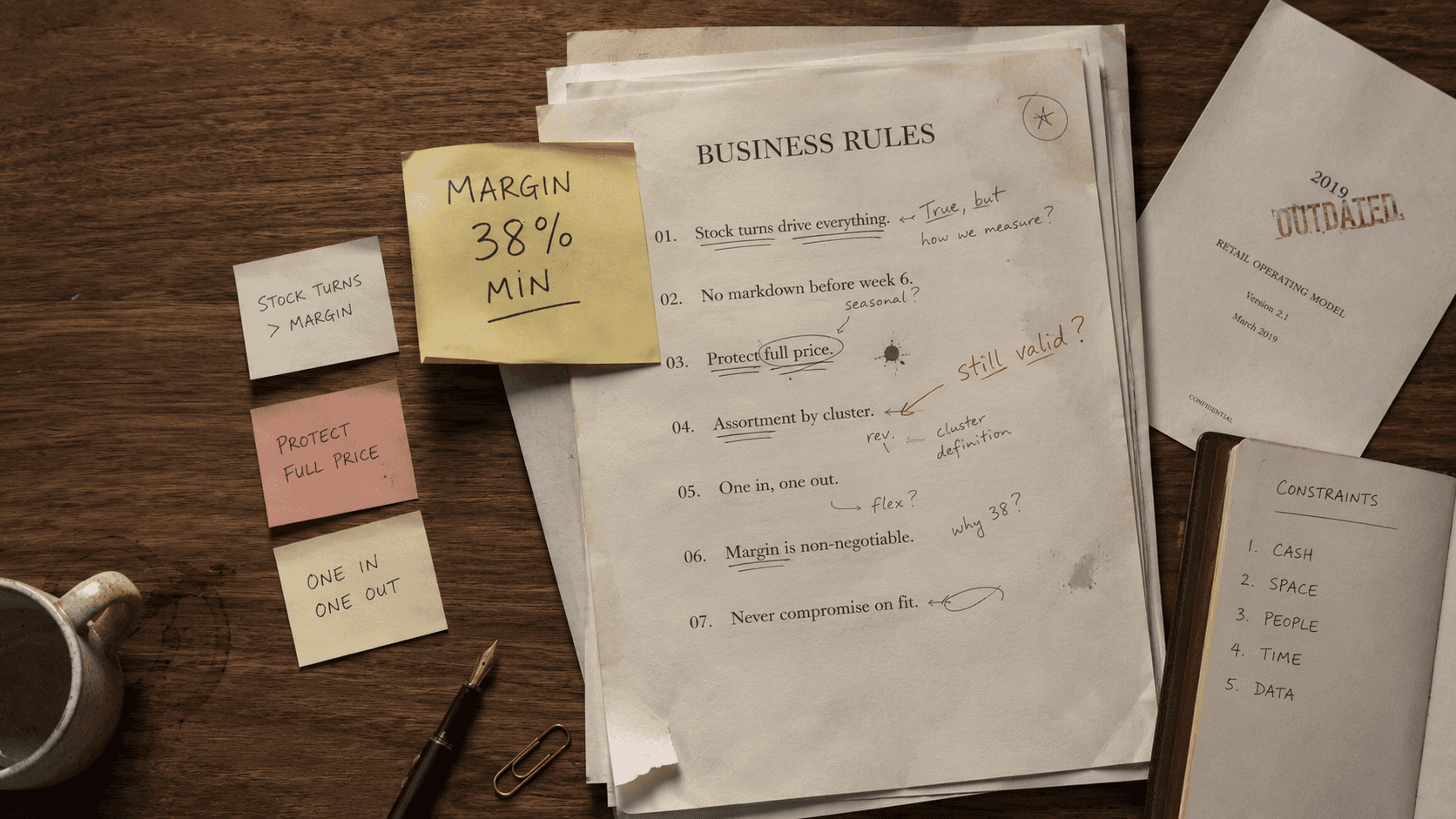
2024. The sport retailer operated on a rich set of business constraints: minimum margin per category, supplier MOQs, store-tier priority on hot products, lead time variations by supplier. These rules had emerged over fifteen years of operations — and they lived in the heads of three senior buyers, plus one PDF from 2019 that was already outdated.
When they hired their first AI vendor, the recommendations regularly broke their rules. The team overrode 70% of them. They didn't lose trust in AI — they realized the AI didn't know what they actually cared about.
The model was technically sound. The rules just never reached it.
The Problematic
The model recommended. The team overrode. Nobody won.
Recommendations from the previous AI vendor were technically sound — they optimized for revenue, sell-through, or whatever target was set. But they didn't know about the team's real rules: 'Brand X products always go to tier-A stores first', 'Margin floor on technical apparel is 38%', 'Supplier Y has 6-week lead times in winter'.
So every recommendation came with a hidden cost: the team had to manually check it against unwritten rules, override what didn't fit, and explain why. After three months, they trusted the model less than their own gut.
Three problems compounded:
Real business rules lived in senior heads, not in any system.
Recommendations regularly broke margin floors or supplier constraints.
70% override rate eroded trust in the AI faster than it built it.
The model didn't fail. The rules just never reached it.
The Solution
Every rule encoded once, in Solya, respected by every recommendation.
Solya's business constraints layer became the single home for every operating rule. The team wrote them down once: minimum margin per category, supplier MOQs and lead times, store-tier priorities, budget caps, transfer policies. Each rule was encoded in a visual builder — no code, no engineering ticket.
From that point on, every recommendation Solya generated respected the rules by construction. Override rate dropped. Trust grew. The team finally had an AI that understood their business.
Visual builder for every rule — buyers wrote them themselves, no engineering.
By-construction enforcement — recommendations check against rules before being surfaced.
Override-driven discovery — when a rule was missing, override patterns surfaced it.
Rules stopped living in heads. They started living in the system.
How we did it
Inside the loop.
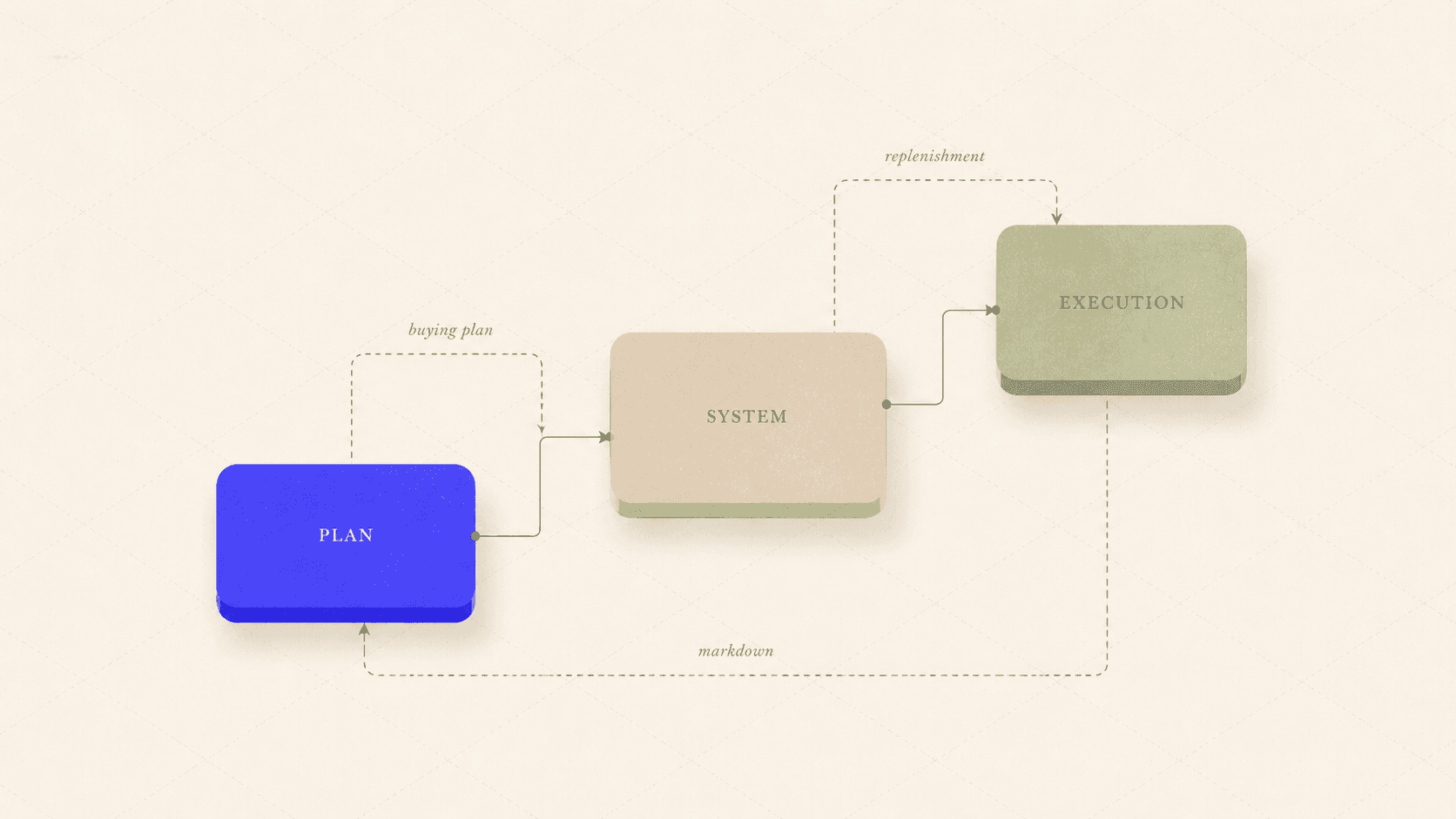
The business rules layer ran on the Intelligence Layer, with the buying team writing the rules and Solya enforcing them. Here's how the system works, end to end.
01 — Inventory the rules.
The buying team ran two workshops to surface every operating rule that mattered. Forty-two rules emerged across margin, suppliers, store tiers, and budget.
02 — Encode in the visual builder.
Each rule was written in Solya's builder: condition, threshold, scope, exception. No code. The buying team did it themselves.
03 — Apply to every recommendation.
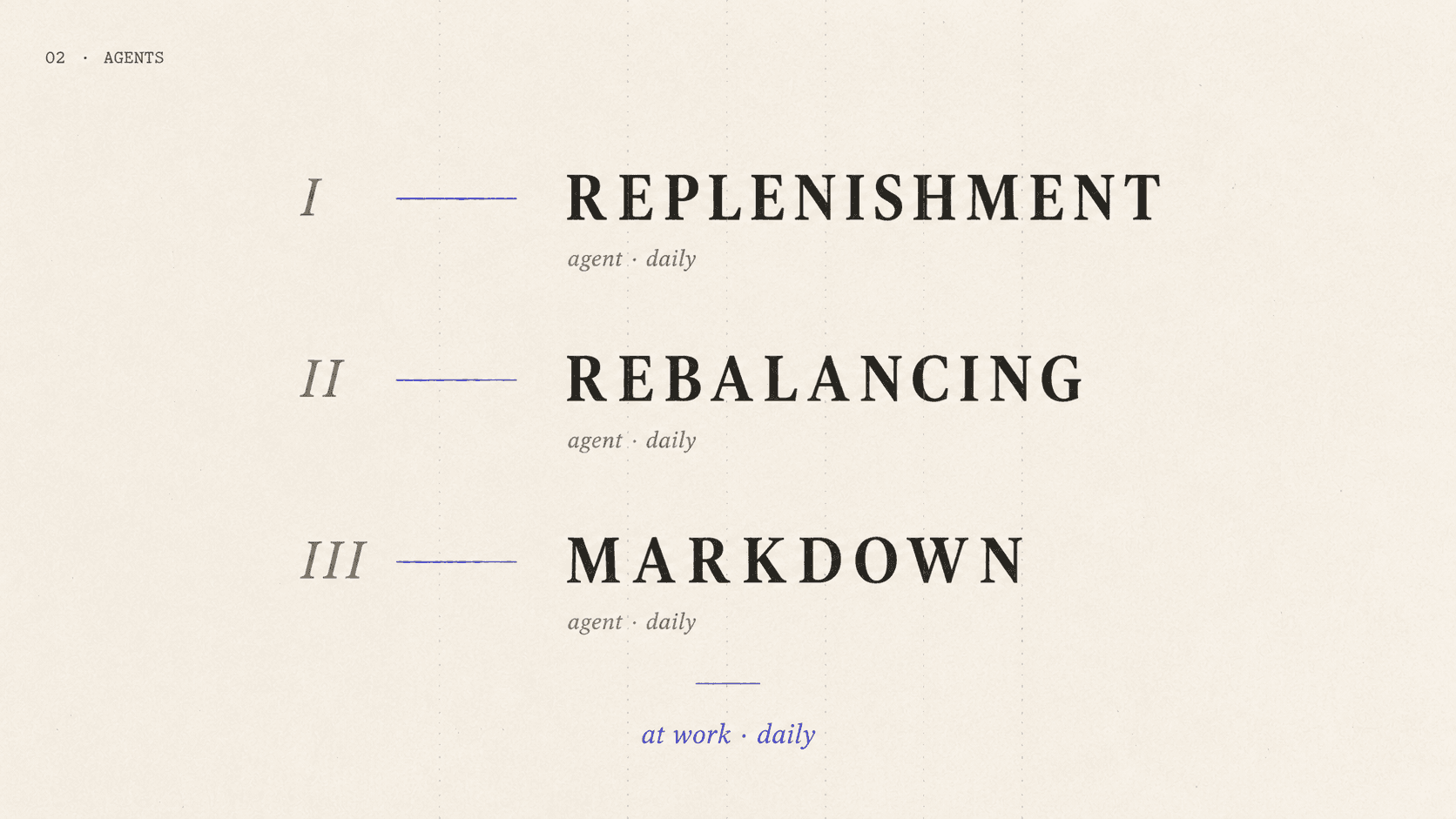
Every output Solya produced — forecasts, allocations, reorders, markdowns — checked against the rules before being surfaced. Violations were flagged or blocked.
04 — Track overrides.
When the team did override a recommendation, Solya logged why. Patterns of overrides surfaced rules that were missing or outdated.
05 — Govern over time.
Rules were versioned. When a rule changed, Solya logged who, when, and why. The history was searchable, auditable, and clear.
Rules stopped living in heads. They started living in the system.
The Impacts
Recommendations that fit the business they serve.
After three months running with rules encoded, override rate dropped sharply, trust in recommendations grew, and the team's tacit knowledge became a shared asset.
1 place — For every business rule.
Versioned — Every change tracked.
0 violations — In recommendations going forward.
70% → 18% — Override rate on recommendations.
"The AI finally understood what we actually care about."
— Head of Buying
Explore more use cases
One platform. Every retail decision.
Inventory, allocation, pricing, planning, execution — connected in a single operational layer.