Operations
Plans that move from screen to system.

Aurélien
The retailer
A 10-store casual apparel retailer, three planners, four thousand five hundred SKUs.
Our retailer operates 10 stores across France in the casual apparel and athleisure segment. The team is lean: a 2-person buying team plus a 1-person operations manager, running roughly 4,500 SKUs in season.
The stack is mainstream for the sector — Fastmag as the system of record, Shopify for e-commerce, and Excel as the planning surface for everything strategic. It works. Until it doesn't.
"We made beautiful plans in Excel. Then someone had to manually translate them into Fastmag, line by line."
— Operations Manager
Context
Plans built in Excel, executed by hand in Fastmag.
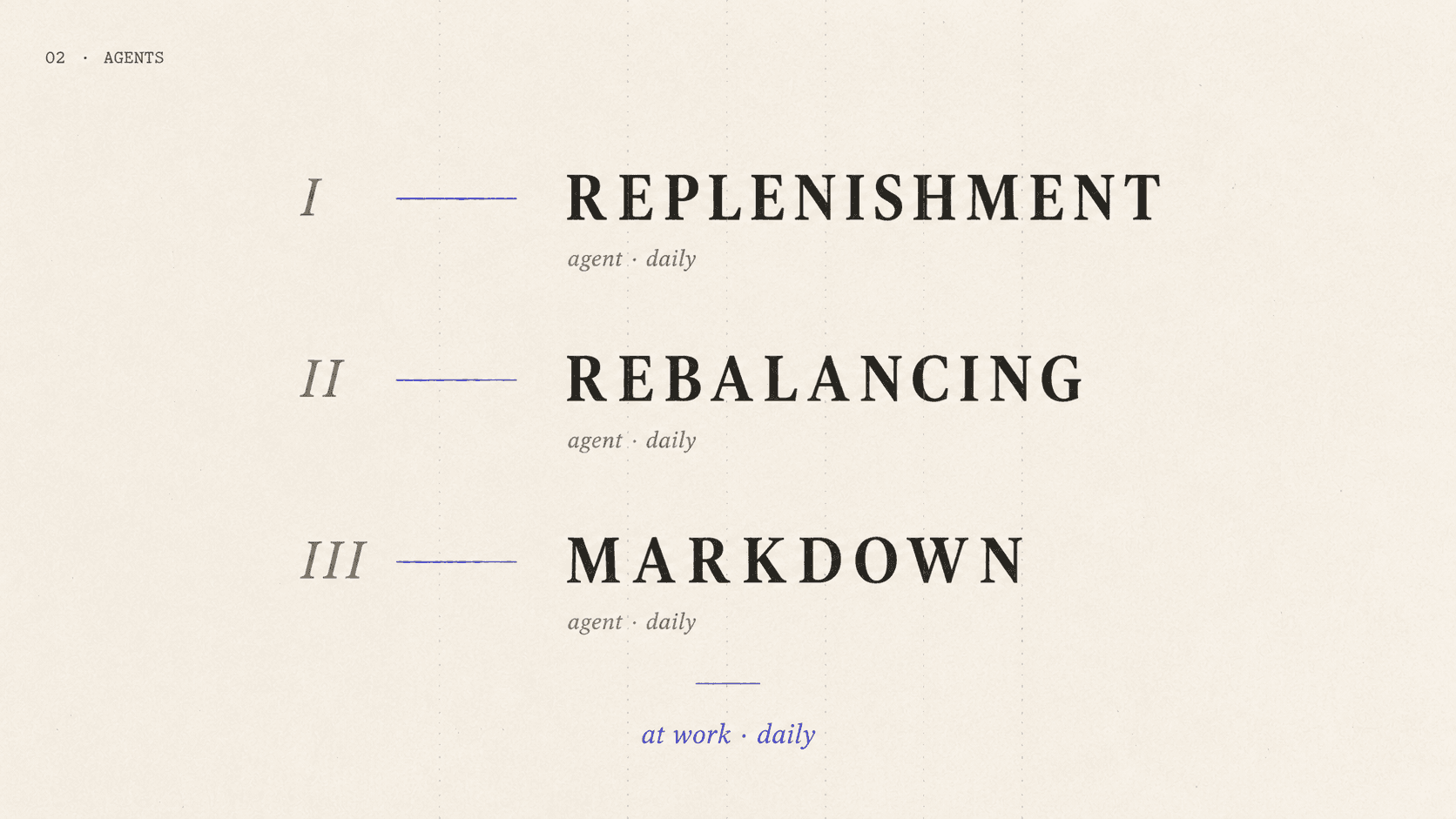
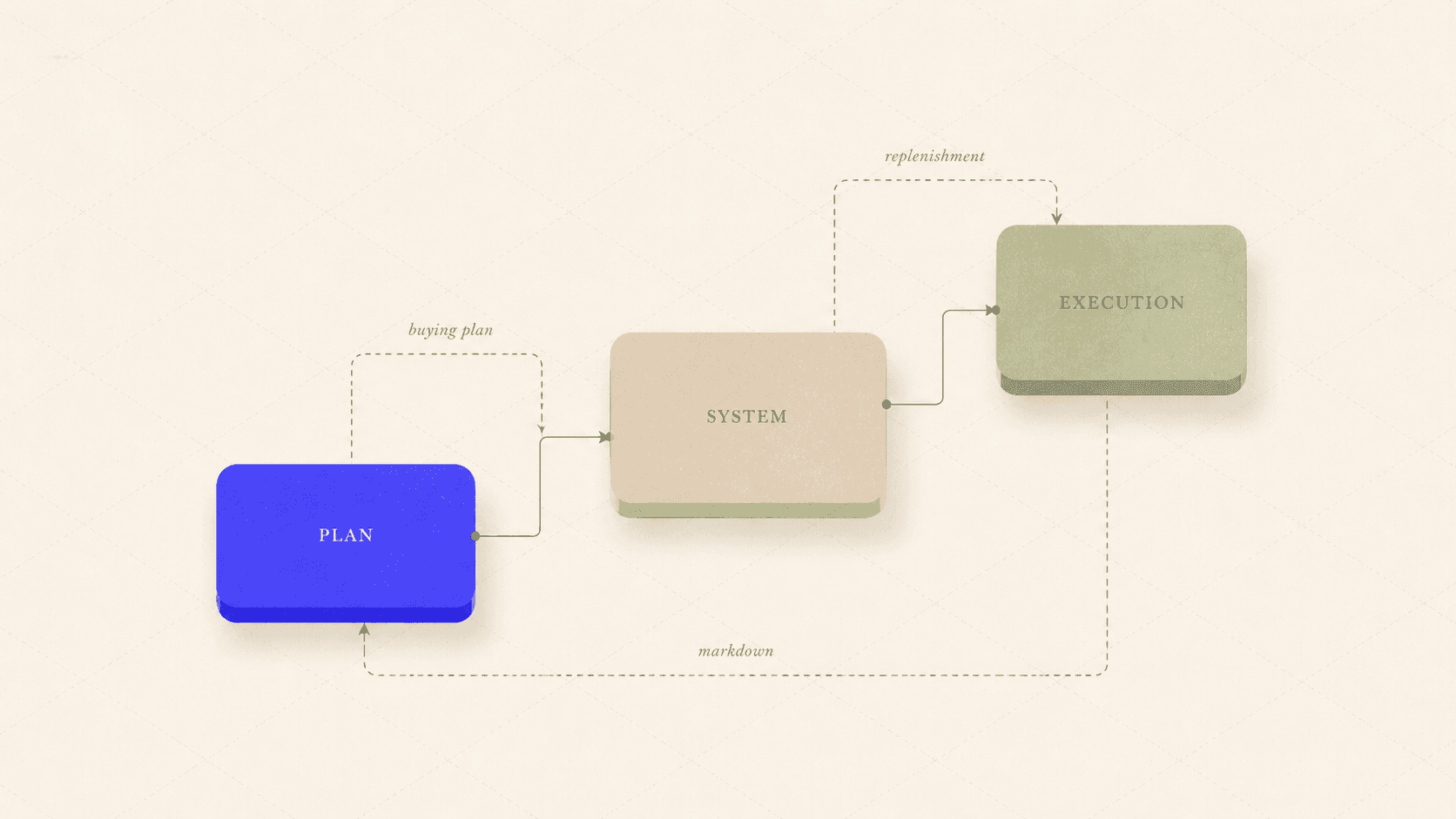
2024. The casual apparel retailer's planning rhythm worked like this: every quarter, the buying team built a buying plan in Excel. Every Monday, the ops team built a replenishment plan in Excel. Every six weeks, the buying team built a markdown plan in Excel.
Each plan was reviewed, validated, and approved. Then someone — usually the operations manager — spent half a day per plan typing it into Fastmag, line by line. Three plans, three retypings, dozens of typos. Every cycle.
The plan and the system existed in two parallel worlds. Excel for thinking. Fastmag for doing. Bridged by a person and a keyboard.
The Problematic
The gap between the plan and the system was a person typing.
Plans in Excel were rich, well-structured, well-debated. Plans in Fastmag were the same plans, retyped manually, with predictable consequences: typos, missed lines, version drift. Whichever version was the truth depended on who you asked.
The operations manager spent half a day per cycle on the translation. Worse: when a plan changed mid-execution — suppliers slipped, demand shifted — the Excel got updated but Fastmag often didn't. The two diverged silently.
Three compounding issues:
Plans built in Excel but executed by retyping into Fastmag.
Half a day of operations manager time per plan, per cycle.
Excel updates rarely propagated to Fastmag, creating silent divergence.
The team built great plans. The system never quite reflected them.
The Solution
Plans built in Solya, executed in Fastmag, no retyping.
Solya's planning apps replaced the Excels. Buyers built the buying plan, ops built the replenishment plan, the team built the markdown plan — all directly in Solya, with AI-generated drafts as starting points and human refinement on top.
When the plan was approved, it pushed to Fastmag automatically. No retyping. No typos. No silent divergence. When the plan changed mid-execution, Fastmag updated with it.
AI drafts seeded by metrics, signals, and business rules — never a blank Excel again.
Human-in-the-loop refinement, with every change logged and reasoned.
Two-way sync between Solya and Fastmag, continuous and silent.
The plan and the system became one continuous artifact.
How we did it
Inside the loop.
The connected planning apps run on the Application and Orchestration Layers, with Solya as the planning surface and Fastmag as the system of record. Here's how the system works, end to end.
01 — Generate the draft plan.
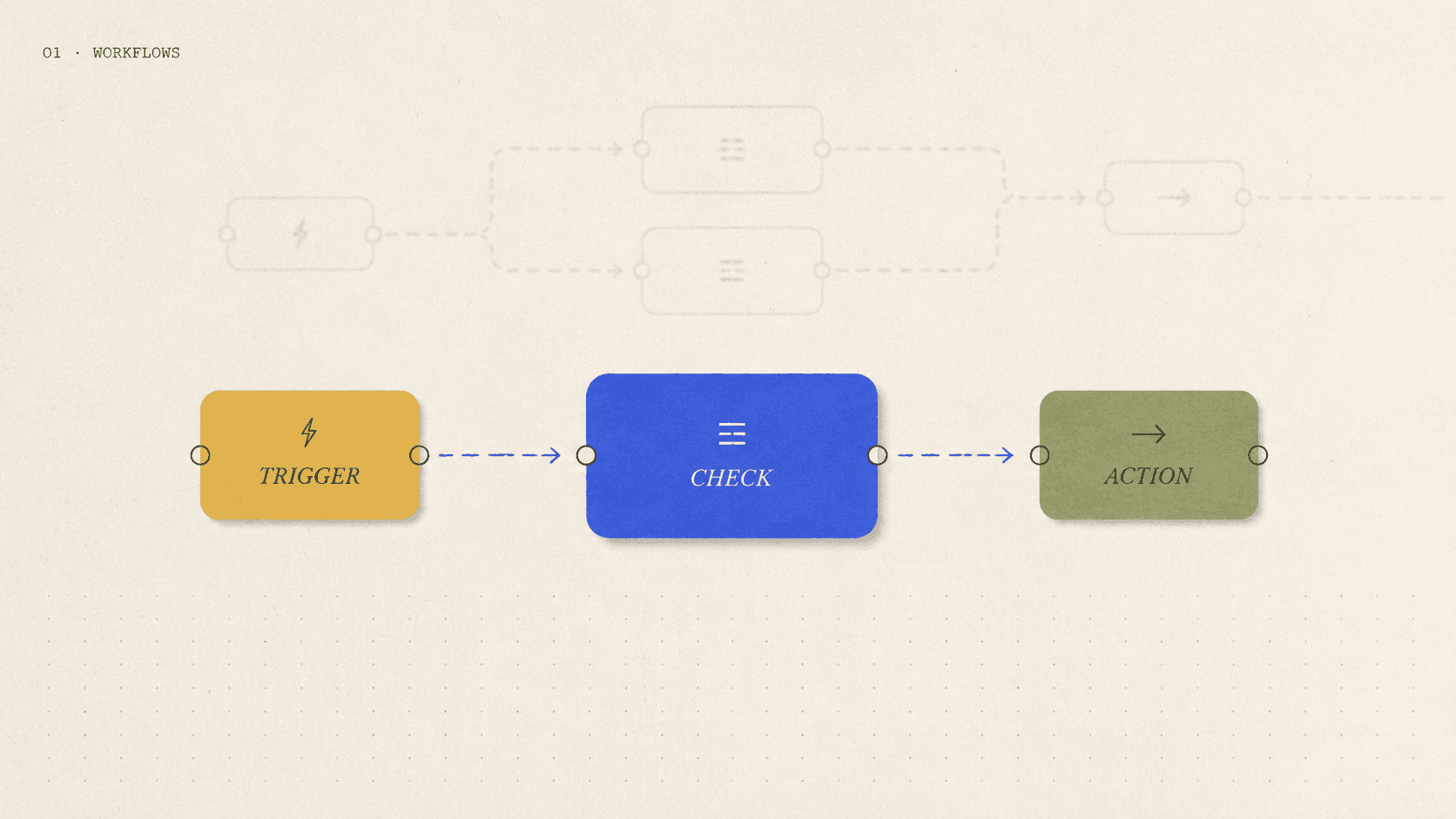
For each plan type, Solya generates an AI-recommended draft based on metrics, signals, and business rules. The draft is a starting point, not a constraint.
02 — Refine with humans.
Buyers, ops, and merchandising teams refine the plan in Solya's UI. Every change is logged, with reasoning when provided.
03 — Validate and approve.
The plan goes through the team's validation steps — peer review, manager approval. Approval triggers the next stage automatically.
04 — Push to Fastmag.
On approval, Solya pushes the plan to Fastmag automatically. Every line, every quantity, every parameter synced. No retyping.
05 — Sync changes both ways.
When the plan is edited mid-execution, Solya pushes the update to Fastmag. When Fastmag execution diverges (e.g., supplier short-shipped), Solya reflects it back. Two-way sync, continuous.
The plan stopped being an artifact. It became a live state.
The Impacts
Plans that match what's actually happening.
After the connected plans went live, the operations manager reclaimed half a day per cycle, plans matched system state, and silent divergence stopped happening.
3 plans — Live, refined, executed in Solya.
Excel → System — Plans flow from screen to action.
0 retyping — Hours per cycle.
Continuous — Sync between plan and system.
"The plan and the system are the same thing now. That used to be a fantasy."
— Operations Manager
Explore more use cases
One platform. Every retail decision.
Inventory, allocation, pricing, planning, execution — connected in a single operational layer.