Operations
Clean SKUs without a cleanup project.

Aurélien
The retailer
A 12-store lifestyle retailer running a 12,000-SKU catalog grown over four years.
Our retailer operates 12 stores across France in the lifestyle apparel multi-canal mid-market segment. The team is structured: a 3-person buying team, a 1-person operations lead, and a 1-person merchandiser, running roughly 6,500 SKUs in season across stores, e-commerce, and three marketplaces.
The stack is mainstream for the sector — LCV Mag as core retail management, Shopify for e-commerce, and Excel as the connective tissue between everything else. It works. Until it doesn't.
"Our SKU master had four years of accumulated mess. Nobody had time to clean it. Nobody could plan against it either."
— Operations Lead
Context
Four years of catalog growth, zero hygiene.
2024. The lifestyle retailer had been growing fast: 6 stores in 2020, 12 stores in 2024, expanding into e-com and three marketplaces. The product master in LCV Mag had ballooned from 3,000 SKUs to 12,000 — and four years of accumulated inconsistencies along the way.
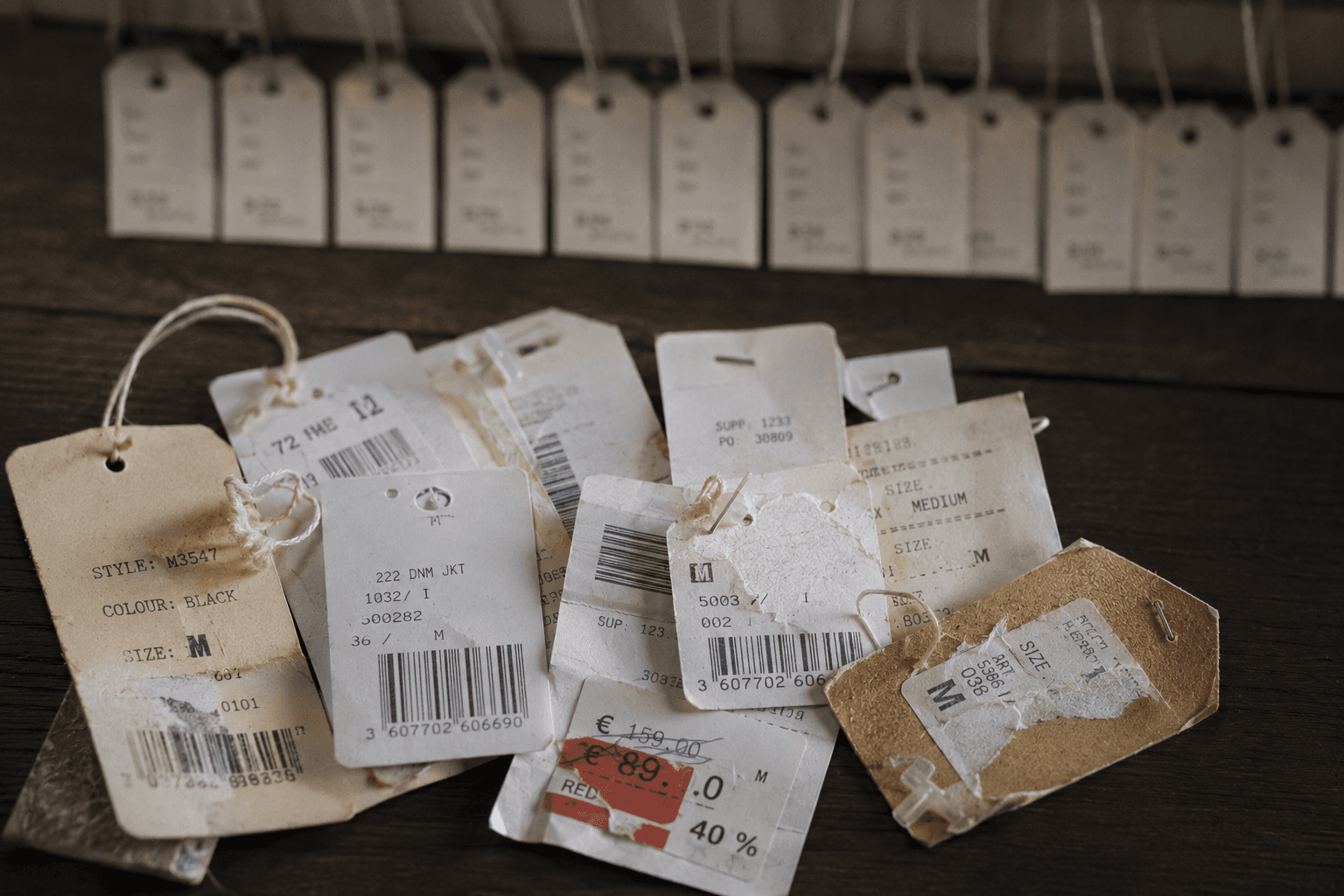
Duplicate references for the same product. Sizes labeled differently across categories. French and English category names mixed. Half-completed attribute fields. Every team complained. Nobody had a week to fix it.
The catalog grew. The hygiene didn't.
The Problematic
The data was wrong in ways that broke every dashboard.
When the buying team tried to analyze sell-through by category, half the lines fell into 'Other' because of inconsistent tagging. When finance tried to track margin by supplier, identical suppliers appeared under three different names. When marketing tried to push a product on the e-com, the master record was missing key attributes.
A cleanup project had been quoted at 8 weeks of work for a junior data analyst. Nobody had 8 weeks. So the mess kept growing.
Three compounding issues:
Duplicate product references across systems and over time.
Inconsistent tagging (categories, sizes, suppliers) breaking aggregations.
Missing or partial attributes blocking marketing and analytics.
The team didn't lack the will. They lacked the bandwidth.
The Solution
Auto-cleanup at ingestion. Continuous hygiene over time.
Solya's data preparation layer cleaned the catalog at ingestion. Duplicates were detected and merged. Inconsistent tags were harmonized using fuzzy matching and the team's preferred taxonomy. Missing attributes were enriched from supplier feeds, product photos, and historical patterns.
More importantly: the cleanup wasn't a one-shot. Solya monitored every new SKU, every catalog update, every supplier feed — and applied the same hygiene continuously. The mess stopped accumulating. The team stopped fearing the catalog.
Fuzzy matching detected duplicates with confidence scoring.
Tag harmonization to the team's chosen taxonomy.
Attribute enrichment from supplier feeds + vision recognition on photos.
Cleanup stopped being a project. It became a property of the data.
Engine
How we did it
Inside the loop.
The cleanup loop ran on the Data Layer, with Solya's preparation engine doing most of the work and the team validating edge cases. Here's how the system works, end to end.
01 — Detect duplicates.
Solya analyzed every product reference across systems. Fuzzy matching surfaced duplicates with high confidence — same product, multiple records.
02 — Harmonize tags.
Categories, sizes, supplier names, and attribute values were normalized to the team's preferred taxonomy. The team approved the taxonomy once; Solya applied it everywhere.
03 — Enrich attributes.
Missing attributes were filled from supplier feeds, product photos (via vision recognition), and historical patterns. Confidence levels were attached to every enrichment.
04 — Surface edge cases.
Where the cleanup wasn't 100% confident, Solya flagged the case for the team. Review took minutes, not hours.
05 — Maintain continuously.
Every new SKU, every catalog update, every new supplier feed went through the same hygiene pipeline. The mess stopped accumulating.
Cleanup stopped being a project. It became a property of the data.
The Impacts
A catalog the team can finally trust.
After the initial cleanup ran (four days, mostly automated), the catalog stayed clean continuously. Dashboards aggregated correctly. Marketing could push every product. Finance could track every supplier.
0 — Manual cleanup weeks.
12,000 — SKUs auto-cleaned and enriched.
Continuous — Cleanup maintained over time.
4 days — For initial automated cleanup pass.
"We stopped saying 'when we have time, we'll clean the data.' Solya took that promise off our backs."
— Operations Lead
Explore more use cases
One platform. Every retail decision.
Inventory, allocation, pricing, planning, execution — connected in a single operational layer.